
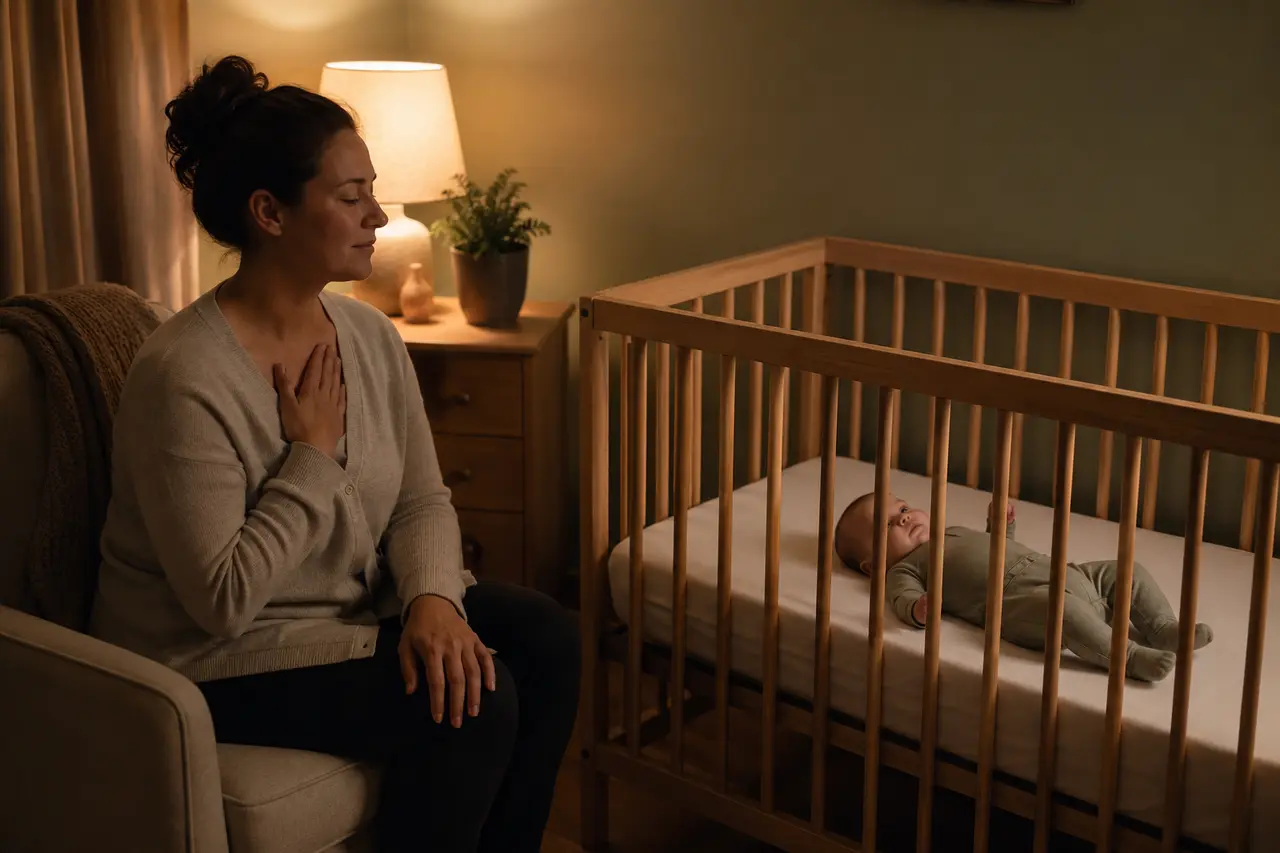
No, sleep training is not necessary for every baby or every family. It is one optional set of strategies for changing how a baby settles to sleep. Choosing it—or choosing not to use it—is not a measure of attachment, discipline, or good parenting.
The useful question is simpler: Is your current sleep situation safe and sustainable, and would a change help?
What counts as sleep training?
The term covers a wide range of approaches. Some parents make gradual changes to rocking, feeding, or parental presence. Others use scheduled check-ins or give a baby brief opportunities to settle. It does not have to mean leaving a baby to cry without response.
Newborn sleep is different
Newborns wake frequently because they need feeding, comfort, and care. They are not expected to follow an adult schedule or consistently settle independently. Follow your baby’s feeding plan and respond to signs of illness or distress.
When families consider a structured change
- Bedtime takes so long that everyone is distressed
- A parent’s exhaustion is affecting safety or mental health
- The baby needs the same lengthy assistance after every normal waking
- The family wants a more predictable routine and can apply it consistently
Before changing nighttime feeds or routines, ask your baby’s clinician whether age, growth, feeding, prematurity, reflux, or another health issue changes the plan.
When it makes sense to wait
- Your current routine works for your family
- Your baby is ill, in pain, or going through a major disruption
- Feeding or weight gain is not yet established
- The method causes more distress than the original problem
- You do not have enough support to be consistent
Try sleep foundations first
Use a short, predictable routine: dim lights, feed as needed, change the diaper, sing or read, and place your baby in the sleep space. Keep nighttime calm and daytime light and interaction appropriate for age.
AAP guidance recommends placing infants on their backs for every sleep, on a firm, flat, non-inclined surface with only a fitted sheet. Keep pillows, blankets, bumpers, toys, positioners, and other soft items out.
Choose a method you can actually follow
You might reduce rocking little by little, pause briefly before intervening when the baby is only fussing, use voice and touch before picking up, or follow a structured check-in plan. Attend promptly when your baby needs feeding, is sick, has a dirty diaper, is in distress, or something feels wrong.
Change one thing at a time
Start with bedtime rather than bedtime, naps, and every night waking at once. Agree in advance on how each caregiver will respond. Give the routine enough consistency to observe a pattern, but stop and reassess if it feels wrong or your baby seems unwell.
What about feeding to sleep?
Feeding to sleep is not inherently a parenting failure. If it works and feeding is safe, you do not have to remove it. If it has become exhausting, gradually move the feed earlier in the routine or let another caregiver handle one settling period.
What about bed-sharing?
Sleep training and sleep location are separate decisions. The AAP recommends room-sharing without bed-sharing and advises that babies sleep in their own safety-approved sleep space. If you bring your baby into bed to feed or comfort, return them to their own space before you sleep.
If exhaustion is creating danger
Do not feed on a couch or armchair when you may fall asleep. Ask another adult to stay with you, set an alarm, or arrange shifts. If sleep deprivation is affecting driving, mood, or your ability to keep yourself or your baby safe, contact your clinician and support network.
The honest bottom line
You do not have to sleep train. You are also allowed to make a structured change because your family needs sleep. Keep safety and feeding needs fixed; treat every other part as adjustable. A responsive relationship is built across thousands of everyday interactions—not decided by one bedtime method.
Safe sleep comes first
Put your baby on their back for every sleep on a firm, flat, non-inclined surface that meets current safety standards. Use only a fitted sheet. Keep pillows, blankets, bumpers, toys, positioners, and other soft items out of the sleep space.
Sources and further reading
Our editorial review used the following US health authorities: