
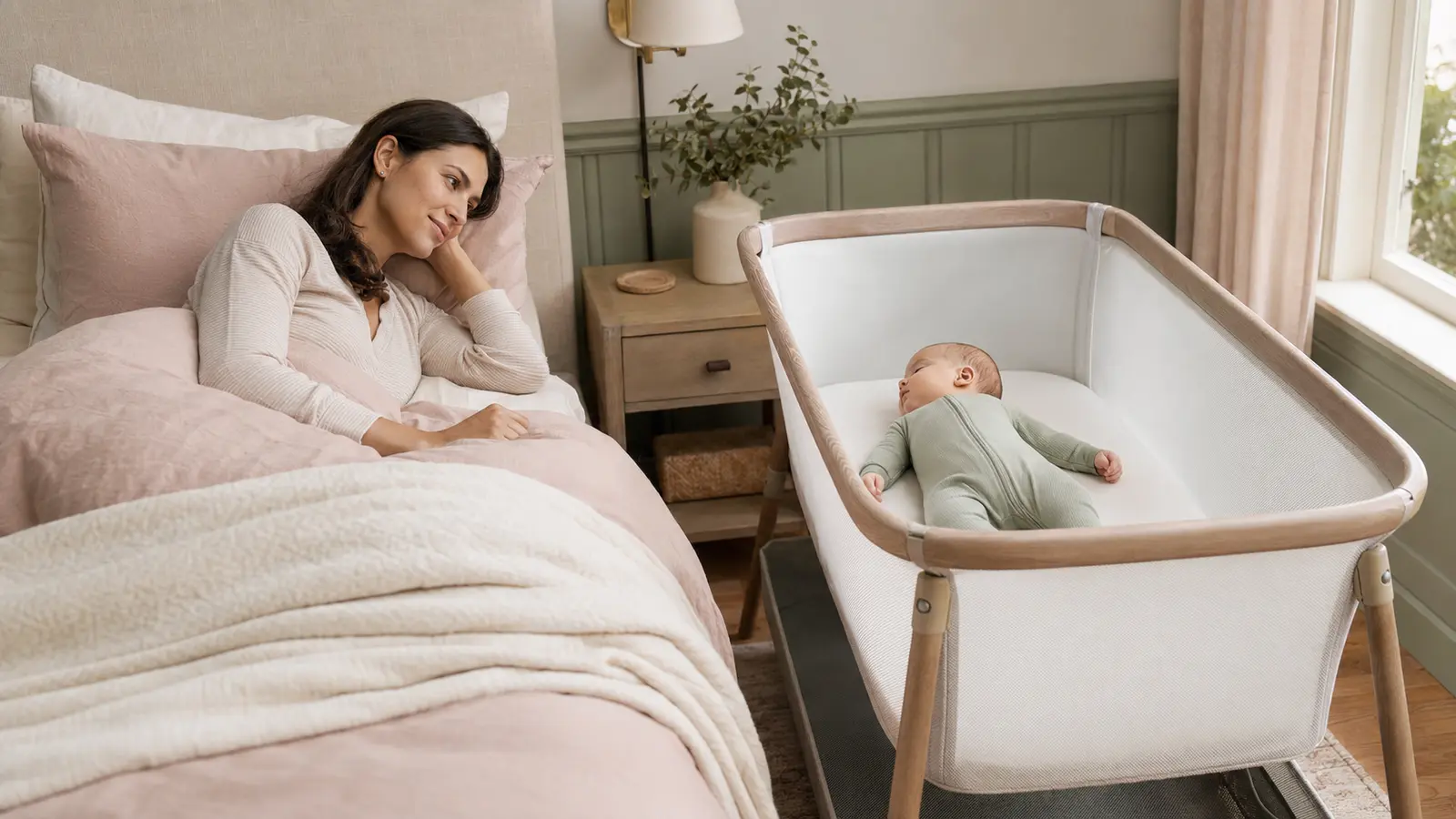
“Cosleeping” can mean two different things: sleeping in the same room or sleeping on the same surface. That distinction matters. The American Academy of Pediatrics recommends room-sharing without bed-sharing and does not recommend sharing an adult bed with a baby.
This article does not judge exhausted parents or pretend accidental sleep never happens. It explains the safest recommended setup and how to reduce danger during night feeds.
The safest recommended setup
- Place baby on their back for every sleep.
- Use a separate crib, bassinet, or play yard that meets current safety standards.
- Use a firm, flat, non-inclined mattress with a fitted sheet only.
- Keep the baby’s sleep space beside the adult bed for at least the first six months.
- Keep pillows, blankets, bumpers, toys, positioners, and other soft items out.
Room-sharing is not bed-sharing
Room-sharing keeps your baby close for feeding and comforting while preserving a separate sleep surface. A bassinet beside the adult bed can reduce how far you need to move at night without placing the baby among adult pillows, blankets, gaps, or another sleeping body.
Why the AAP advises against bed-sharing
Adult beds are designed for adults. Babies can suffocate in soft bedding, become trapped between a mattress and wall or frame, fall, or be overlaid by another sleeper. Moving the bed against a wall or adding a rail can create entrapment spaces and does not make an adult bed an approved infant sleep surface.
Bed-sharing risk is especially high with smoking, alcohol, cannabis or other drugs, sedating medication, extreme fatigue, prematurity or low birth weight, and soft surfaces. Sofas and armchairs are particularly dangerous places to fall asleep with a baby.
If you bring baby into bed to feed
Before feeding, move pillows, sheets, blankets, and other soft items away from the baby in case you accidentally fall asleep. As soon as you wake or finish the feed, return the baby to their own safe sleep space. This preparation reduces hazards during an unplanned event; it does not make bed-sharing risk-free.
Avoid couches and armchairs when you are sleepy
If you might doze, do not settle into a sofa or cushioned chair with the baby. Ask another awake adult to stay nearby, set an alarm as a backup, or feed in a cleared adult bed and return baby to the bassinet afterward. The separate infant sleep space should be ready before the feed begins.
Feeding method does not change the sleep surface
Breastfeeding has health benefits, but it does not remove the hazards of an adult bed. Bottle-fed and breastfed babies should both be placed on their back in a separate, firm, flat, empty sleep space.
What about bedside sleepers?
Use only a product intended and approved as an infant sleep space, assemble it exactly as instructed, and check current safety information. Avoid improvised sidecar cribs, in-bed nests, positioners, loungers, inclined sleepers, and products that leave gaps beside the adult mattress.
Make the recommended setup easier to use
Keep the bassinet within arm’s reach, place a dim light nearby, prepare feeding supplies before bed, and divide night responsibilities when possible. A safe plan has to work at 3 a.m., not only look sensible in daylight.
If your baby will not settle separately
Frequent waking and wanting contact are normal in infancy. Ask your baby’s clinician about feeding, reflux symptoms, breathing, illness, or other concerns. You can use responsive settling and still return your baby to a separate safe sleep space.
Closeness does not require sharing a mattress. Room-sharing gives you the baby-nearby part of cosleeping while following current safe-sleep guidance.
Safe sleep comes first
Put your baby on their back for every sleep on a firm, flat, non-inclined surface that meets current safety standards. Use only a fitted sheet. Keep pillows, blankets, bumpers, toys, positioners, and other soft items out of the sleep space.
Sources and further reading
Our editorial review used the following US health authorities: