
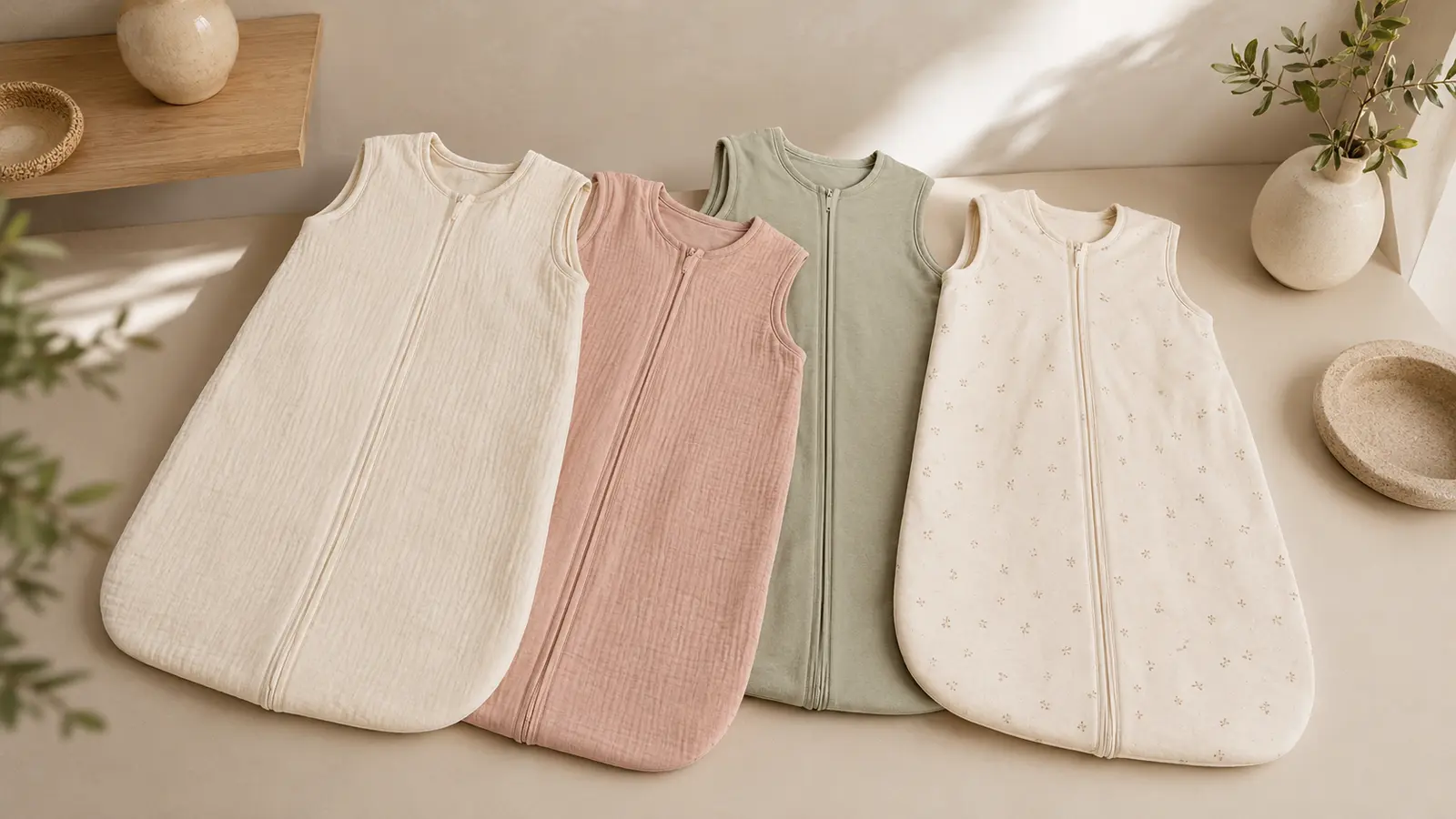
A sleep sack is a wearable blanket that can keep a baby comfortable without adding a loose blanket to the crib. You do not need the most expensive model or a promise of longer sleep. You need a simple, unweighted garment that fits your baby and is used as the maker directs.
This guide is brand-neutral because sizes, fabrics, safety notices, and product lines change. It explains the features worth checking rather than pretending one current model is “best” for every baby.
1. An unweighted design
Skip any sleep sack, swaddle, sleeper, or blanket with added weight. The American Academy of Pediatrics and the Consumer Product Safety Commission advise against weighted infant sleep products. A product marketed as calming or sleep-enhancing does not override safe-sleep guidance.
2. The right size now
Use the manufacturer’s current height and weight chart, not age alone. The neck opening should not be large enough to ride over the baby’s mouth or nose, and the armholes should not let the baby slip down inside. Do not size up for future growth.
3. Enough room for hips and legs
The lower part should allow the hips and knees to bend and move naturally. A sleep sack is not meant to pin the legs straight or restrict normal movement.
4. Arms-out freedom after swaddling
A standard sleeveless sack leaves both arms free. If you use a swaddle-style product, stop swaddling as soon as your baby shows signs of trying to roll and follow the product limits. A baby who may roll needs their arms available.
5. Fabric that suits the room
Cotton, muslin, fleece, and other fabrics feel different and hold different amounts of warmth. Choose for the actual room temperature, then dress baby in light layers underneath. Check the chest or back for sweating or unusual warmth rather than judging by cool hands.
6. Clear warmth guidance
Some brands use a TOG rating, but the meaning is useful only alongside that manufacturer’s dressing and temperature guide. Do not stack sleep sacks or add loose bedding to reach a number. When unsure, ask your baby’s clinician how to dress your baby for your home.
7. No hood or head covering
Choose a sleep sack that leaves the head and face completely uncovered. Indoor hats and hooded sleepwear can contribute to overheating or cover the face.
8. A secure, smooth closure
Check that the zipper or snaps close fully, have no loose pieces, and do not rub the chin. A two-way zipper can simplify nighttime diaper changes, but it is a convenience—not a safety requirement.
9. No loose decorations
Avoid cords, ties, bulky appliqués, detachable pieces, or damaged fasteners. Inspect the garment after washing and stop using it if seams, snaps, or zippers begin to fail.
10. Straightforward washing
Read the care label before buying. A sack you can wash and dry reliably is more useful than a delicate design that is rarely ready when needed. Having two in rotation is usually more practical than buying a large collection.
11. A design compatible with the sleep space
The sack belongs on the baby, not under or around them. Always place baby on their back on a firm, flat, non-inclined sleep surface with a fitted sheet only. Keep blankets, pillows, bumpers, toys, and positioners out.
12. A recall check
Before using a hand-me-down or secondhand sleep sack, identify the exact product and check current recalls. Confirm the size label is readable and every closure works. Do not use a garment with missing information or an improvised repair.
A simple buying checklist
- Unweighted and sleeveless for arms-out sleep.
- Correct current size with secure neck and arm openings.
- Roomy at the hips, with no hood, ties, or loose pieces.
- Appropriate fabric and maker-specific warmth guidance.
- Easy to inspect, wash, and use exactly as instructed.
A sleep sack can replace loose bedding, but it cannot make an unsafe sleep surface safe or guarantee longer sleep. The best choice is the plain one that fits correctly and supports the same safe setup every night.
Safe sleep comes first
Put your baby on their back for every sleep on a firm, flat, non-inclined surface that meets current safety standards. Use only a fitted sheet. Keep pillows, blankets, bumpers, toys, positioners, and other soft items out of the sleep space.
Sources and further reading
Our editorial review used the following US health authorities: