
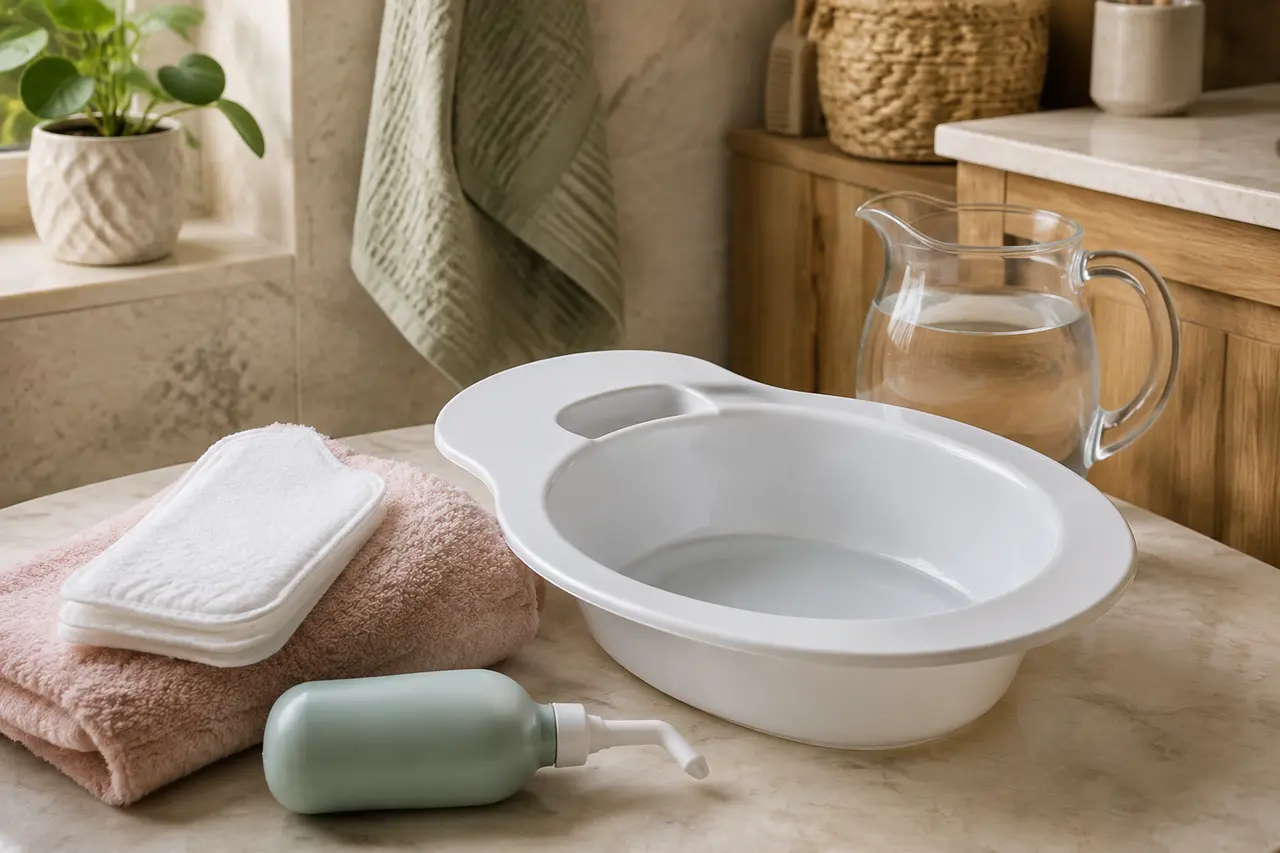
After a vaginal birth, even sitting can feel like a negotiation. A shallow soak called a sitz bath may soothe soreness around the perineum, hemorrhoids, or healing tissue—but it needs to stay simple and clean.
Ask your maternity care professional whether a sitz bath is appropriate for your birth injury, stitches, and healing stage. Follow their instructions if they differ from general guidance.
What is a sitz bath?
It is a warm, shallow bath that covers the perineal and anal area. You can use a cleaned bathtub or a purpose-made basin that fits securely over the toilet. It is not the same as soaking your whole body in a hot bath.
When might it help?
Warm water can feel soothing for perineal tenderness, swelling, hemorrhoids, and discomfort with bowel movements. In the first day after birth, some care teams recommend cold packs instead. Ask which option fits your timeline.
How to prepare it safely
- Wash your hands.
- Clean the tub or basin according to its instructions and rinse away cleaning product.
- Add comfortably warm—not hot—water.
- Sit carefully for the time recommended by your clinician, often a short soak.
- Stand slowly in case you feel lightheaded.
- Pat the area dry with a clean, soft towel; do not rub.
- Empty, wash, rinse, and air-dry the basin after use.
What should go in the water?
Plain warm water is the safest default. Do not add essential oils, fragranced products, harsh soap, bubble bath, herbs, salts, or antiseptics unless your clinician specifically recommends them. “Natural” products can still irritate healing tissue.
Can you use one with stitches?
Many people with perineal stitches are given water-based comfort measures, but injuries and repair instructions vary. Confirm the timing with your care team, especially after a severe tear, wound complication, or infection concern.
What a sitz bath cannot treat
A soak does not treat infection, heavy bleeding, a wound that is opening, urinary retention, severe constipation, or a blood clot. It should make you feel more comfortable, not delay assessment.
Stop and call your clinician if
- Pain, redness, swelling, or discharge is getting worse
- You notice foul-smelling fluid or a wound opening
- You have a fever of 100.4°F (38°C) or higher
- You cannot urinate, or urination is increasingly painful
- You soak through a pad in an hour or pass very large clots
- You feel faint, short of breath, or seriously unwell
A simple comfort routine
Keep a peri bottle, clean pads, prescribed pain relief, water, and the sitz-bath supplies together. That reduces the number of decisions you have to make when you are sore and tired.
The goal is gentle relief: clean basin, plain warm water, short soak, careful drying, and no pressure to tolerate symptoms that are worsening.
Get urgent help when something feels wrong
Seek medical care immediately for urgent warning signs such as trouble breathing, chest pain, fainting, a fever of 100.4°F (38°C) or higher, heavy bleeding, severe pain that does not go away, or thoughts of harming yourself or your baby. Tell the clinician that you are pregnant or were pregnant within the last year.
Sources and further reading
Our editorial review used the following US health authorities: