
A sneeze causes a leak. Your pelvis feels heavy by the end of the day. Sex is uncomfortable, or you cannot tell whether you are doing a Kegel correctly. These experiences are common after birth, but common does not mean you have to live with them.
The pelvic floor needs both strength and the ability to relax. Repeating hard squeezes is not the right answer for every symptom, especially when muscles are tight or painful.
What the pelvic floor does
This group of muscles supports the bladder, bowel, uterus, and vaginal tissues. It helps with continence, sexual function, pressure management, and core coordination. Pregnancy alone changes this system; both vaginal and cesarean births can affect it.
Start with breathing and awareness
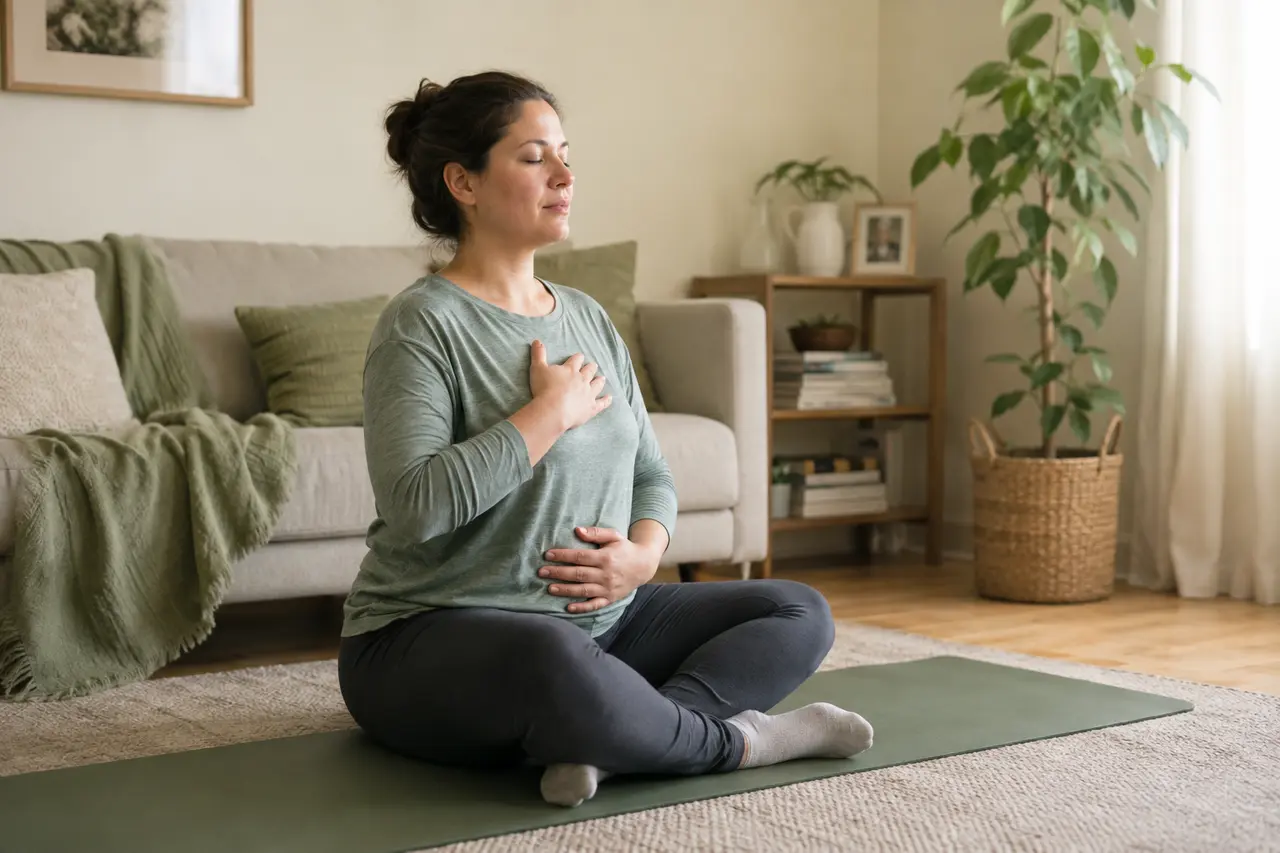
Lie on your side or back in a comfortable position. Inhale gently and let your ribs, belly, and pelvic floor soften. Exhale without forcing. Notice movement rather than trying to produce a large contraction.
If you are newly postpartum, have stitches, significant pain, a complicated birth, or surgery, ask your maternity care professional when to begin specific exercises.
How to find a gentle contraction
- Empty your bladder and get comfortable.
- Exhale and imagine lifting the muscles around the vagina and anus inward and upward.
- Keep your buttocks, thighs, jaw, and breath relaxed.
- Release completely on the inhale.
The release matters as much as the lift. Do not repeatedly stop urine midstream as an exercise; that can interfere with normal emptying.
A beginner routine
If contractions are comfortable and your clinician has not advised otherwise, try five gentle lifts. Hold each for up to three seconds, then relax for at least the same amount of time. Add five quick, light contractions with full release between them.
Practice once or twice daily at first. Quality matters more than reaching a large number. Stop if symptoms worsen.
Progress into everyday movement
When the basic contraction feels coordinated, use a gentle exhale and pelvic-floor response before coughing, lifting the car seat, or standing from a chair. Progress walking and strengthening gradually according to your recovery.
Signs you may need relaxation, not more Kegels
- Pelvic or tailbone pain
- Pain with penetration
- Difficulty starting urination or fully emptying
- Constipation or straining
- A feeling that contractions increase pressure or pain
A pelvic-floor physical therapist can assess whether muscles are weak, overactive, poorly coordinated, or affected by scar tissue. An online routine cannot make that distinction.
When to seek an assessment
Ask for help if leaking, heaviness, bulging, bowel symptoms, or pain persist; if exercise causes bleeding or pressure; or if you simply cannot feel contraction and release. You do not need to wait until symptoms are severe.
What not to rush
Running, jumping, heavy lifting, and intense abdominal work create more pressure than breathing and walking. A six-week visit is a checkpoint, not automatic clearance for every activity. Recovery varies with birth injuries, surgery, sleep, prior fitness, and symptoms.
Your five-minute reset
- One minute of slow rib and belly breathing
- Five gentle lift-and-release contractions
- Five short contractions with full relaxation
- Five sit-to-stands, exhaling as you rise, if comfortable
- One minute noticing whether symptoms improved or worsened
Pelvic-floor recovery is not about clenching all day. It is about rebuilding coordination, pressure control, strength, and relaxation—with specialist help when your body asks for it.
Get urgent help when something feels wrong
Seek medical care immediately for urgent warning signs such as trouble breathing, chest pain, fainting, a fever of 100.4°F (38°C) or higher, heavy bleeding, severe pain that does not go away, or thoughts of harming yourself or your baby. Tell the clinician that you are pregnant or were pregnant within the last year.
Sources and further reading
Our editorial review used the following US health authorities: