
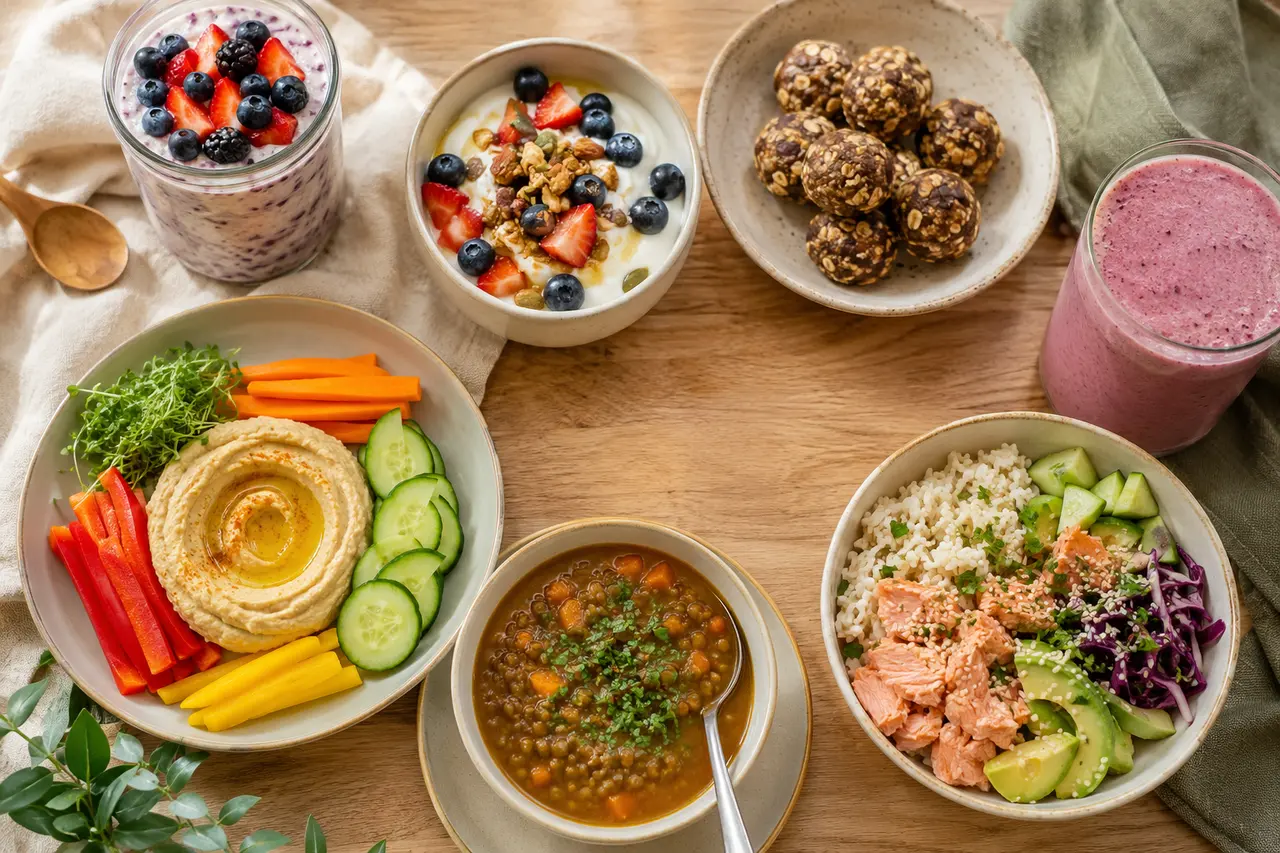
The internet loves to promise that one cookie, herb, or drink will transform milk supply overnight. Evidence does not support treating any particular food as a guaranteed milk booster.
What food can do is help you eat regularly during a physically demanding season. These lactation recipes focus on protein, fiber, fats, carbohydrates, and easy preparation. They are nourishing foods—not medical treatment.
No-cook and make-ahead breakfasts
1. Berry overnight oats
Combine ½ cup rolled oats, ¾ cup milk, 1 tablespoon chia seeds, berries, and yogurt. Refrigerate overnight. Add more milk before eating if needed.
2. Peanut butter banana oatmeal
Cook oats with milk, then stir in sliced banana, peanut butter, and cinnamon. Make two portions and reheat the second the next day.
3. Greek yogurt breakfast jar
Layer Greek yogurt, fruit, oats or granola, and chopped nuts. Use seed butter if nuts are not suitable for your household.
4. Freezer breakfast burritos
Fill tortillas with scrambled eggs, beans, cooked vegetables, and cheese. Wrap individually, freeze, and reheat until steaming hot.
One-handed snacks
5. Oat and nut-butter bites
Mix oats, nut or seed butter, ground flaxseed, and enough mashed banana or honey to bind. Roll into balls and refrigerate. Do not give honey to infants under 12 months.
6. Apple sandwich rounds
Spread nut or seed butter between two thin apple rounds. Add cinnamon or finely shredded coconut.
7. Hummus snack box
Pack hummus with pita wedges, cucumber, peppers, olives, and cheese. Store it where you can grab it before a feeding session.
8. Cottage cheese toast
Top whole-grain toast with cottage cheese and tomato, or with berries and a drizzle of maple syrup.
9. Simple trail mix
Combine unsalted nuts, whole-grain cereal, pumpkin seeds, and dried fruit. Add chocolate chips if they make the snack more appealing.
Fast lunches and dinners
10. Salmon rice bowl
Layer cooked rice, fully cooked salmon, avocado, cucumber, and steamed edamame. Use canned salmon for a faster version.
11. Lentil tomato soup
Simmer red lentils with canned tomatoes, carrots, onion, low-sodium broth, and cumin until soft. Freeze in single portions.
12. Sheet-pan chicken and vegetables
Roast chicken pieces, sweet potato, broccoli, and red onion with olive oil and seasoning until the chicken reaches a safe internal temperature.
13. Spinach pesto pasta
Toss warm pasta with pesto, white beans, spinach, and cherry tomatoes. The beans add protein without another pan.
14. Egg and avocado grain bowl
Top quinoa or brown rice with a fully cooked egg, avocado, greens, and a lemon-tahini dressing.
15. Black bean quesadillas
Mash black beans with salsa, spread on a tortilla, add cheese, fold, and cook until hot and crisp. Freeze extras between sheets of parchment.
What actually supports milk production?
Frequent, effective milk removal is usually more important than a special recipe. If supply seems low, an IBCLC or clinician can assess feeding, pump fit, infant growth, medications, and health factors. Pump output alone does not diagnose low supply.
Choose three recipes that sound easy, ask someone else to prepare one, and put food where you feed or pump. Nourishment should reduce pressure—not become another test you have to pass.
Pain and milk-supply worries deserve help
Ongoing nipple pain, cracked or bleeding nipples, fever, breast redness, concerns about weight gain, or too few wet diapers are reasons to contact an IBCLC or your baby’s clinician. Online tips cannot assess milk transfer or your baby’s health.
Sources and further reading
Our editorial review used the following US health authorities: