
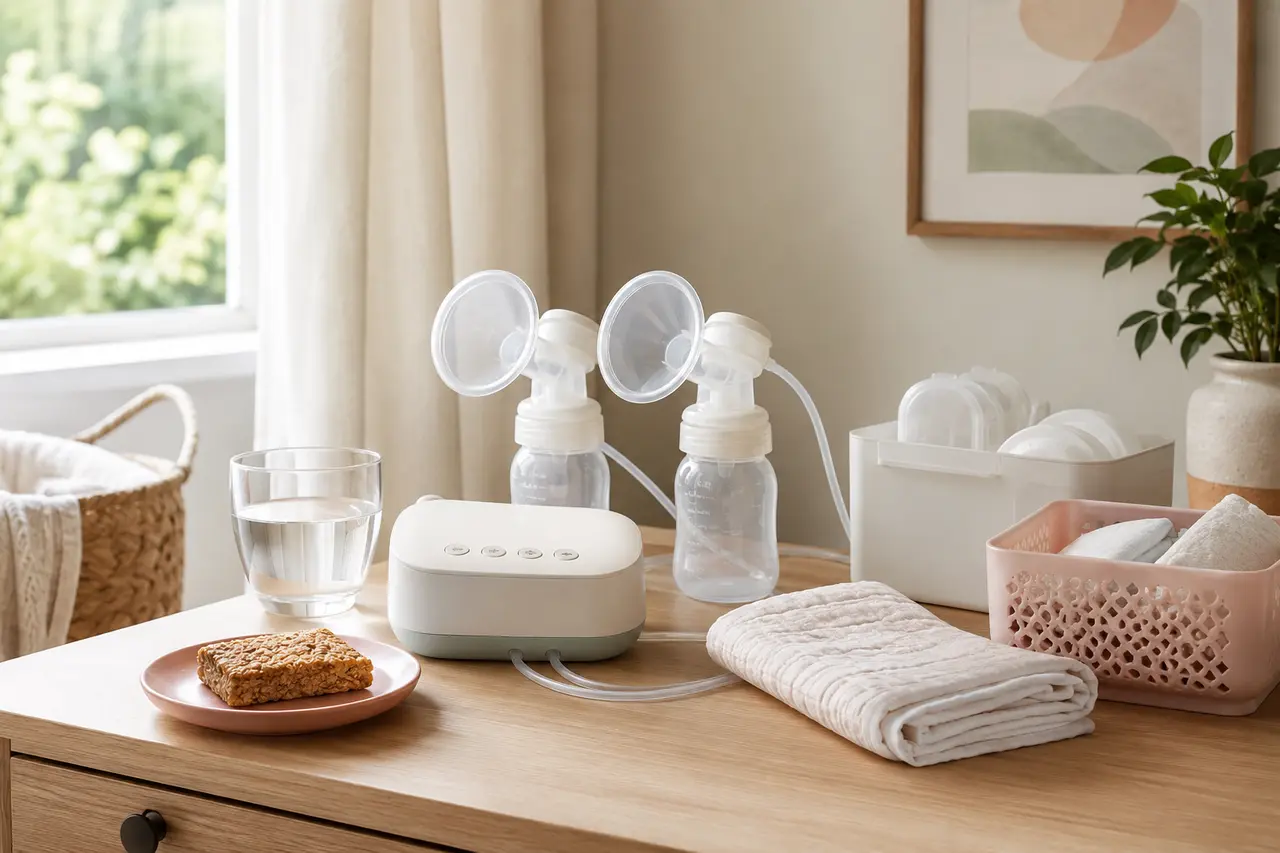
You finish a pumping session, look at the bottles, and immediately wonder whether the amount is enough. That number can feel personal, but it is not a grade on your body or your effort.
A pump does not always remove milk as effectively as a baby, and output varies by time of day, recent feeds, pump fit, stress, and individual physiology. If you need more milk for feeds while you are apart, the most useful goal is comfortable, frequent, effective milk removal—not chasing a dramatic number from one session.
1. Start with your baby’s needs, not someone else’s freezer
A large frozen stash is not required for successful breastfeeding. If you are pumping while away, the CDC recommends expressing milk about as often as your baby normally drinks. Your baby’s clinician can help you interpret growth, wet diapers, and feeding needs.
2. Check the flange fit
Your nipple should move through the tunnel without painful rubbing, pinching, whitening, or excessive tissue being pulled in. Fit can differ between breasts and change over time. A flange that hurts deserves adjustment, not stronger suction.
An IBCLC can observe a session and help assess fit. Manufacturer sizing charts can be a starting point, but comfort and milk removal matter more than a single measurement.
3. Use the lowest effective suction
Higher suction does not automatically produce more milk. Begin low and increase only to a comfortable level. Pumping should feel like firm pulling, not sharp pain. Pain can inhibit letdown and damage tissue.
4. Match pumping frequency to milk removal
Milk production responds to removal. When you replace feeds with bottles, try to pump around those feeding times. If output is not meeting your baby’s needs, the CDC suggests that an additional session may help. More is not always better, though—oversupply and inflammation can also cause problems.
5. Try hands-on pumping
Gentle breast massage before pumping and comfortable compressions during milk flow may help some people remove milk more effectively. Avoid deep, forceful massage, especially if the breast is swollen or painful.
6. Give letdown a little help
Sit somewhere comfortable, loosen your shoulders, breathe slowly, and look at a photo or video of your baby if that helps. Warmth may feel soothing, but it should never be hot enough to burn. Stress does not mean you cannot make milk; it can simply make letdown slower.
7. Inspect the pump and replace parts as directed
Loss of suction can come from worn valves, loose connections, damaged tubing, or incorrect assembly. Follow the replacement schedule for your exact model rather than a universal internet timetable.
8. Eat regularly and drink to thirst
You do not need a special drink or extreme water intake. Keep water nearby, eat enough food, and choose easy meals and snacks you can sustain. Severe calorie restriction can make an already demanding period harder.
9. Make cleaning part of the plan
Wash hands before handling pump parts and follow current CDC guidance for cleaning, drying, and storing every piece that contacts milk. If your baby was premature or has health concerns, ask the care team whether extra sanitizing steps are needed.
10. Get help before buying another gadget
A sudden drop in output, ongoing pain, cracked or bleeding nipples, breast redness with fever, or concerns about wet diapers or weight gain need qualified assessment. An IBCLC or clinician can look at milk transfer, pump fit, feeding frequency, medications, health conditions, and supplementation.
A realistic pumping reset
- Observe one full session for comfort and fit.
- Check every connection and replace worn parts according to the manufacturer.
- Pump when a bottle replaces a feed, when possible.
- Add one manageable session only if more removal is appropriate.
- Track the daily pattern for several days instead of judging one bottle.
Your pumping output is information, not a verdict. The best plan is the one that feeds your baby and protects your physical and mental health.
Pain and milk-supply worries deserve help
Ongoing nipple pain, cracked or bleeding nipples, fever, breast redness, concerns about weight gain, or too few wet diapers are reasons to contact an IBCLC or your baby’s clinician. Online tips cannot assess milk transfer or your baby’s health.
Sources and further reading
Our editorial review used the following US health authorities: