Postpartum shopping lists can make it sound as though recovery requires a trolley full of specialized products. It does not. Most people need absorbent supplies, comfortable clothing, easy food and water, and a few items matched to their birth and feeding plan.
This guide is brand-neutral because product formulas, models, prices, and availability change. It is an editorial checklist, not a hands-on comparison or medical endorsement.
1. Maternity pads
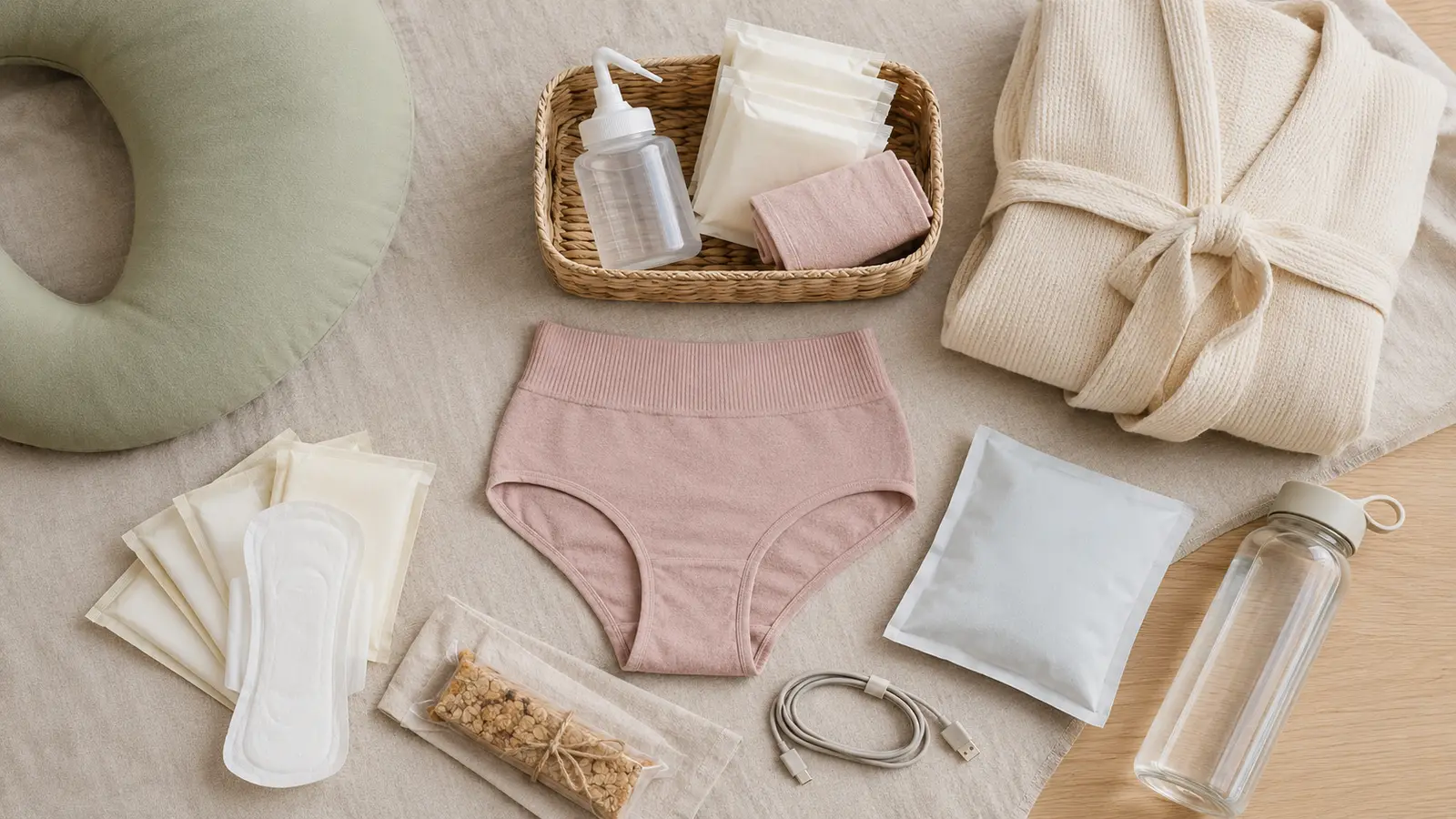
Choose unscented, highly absorbent pads designed for postpartum bleeding. Tampons and menstrual cups are generally avoided during early healing unless your clinician says otherwise.
2. Comfortable disposable or washable underwear
Look for a soft waistband, enough coverage to hold a large pad, and a fit that does not press on a C-section incision. A small multipack is often enough to learn what feels comfortable.
3. Plain peri bottle
An angled bottle can make rinsing the external perineal area with warm water easier after a vaginal birth. Plain water is usually the simplest option; do not douche or add ingredients without medical advice.
4. Wrapped cold pack
A reusable pack with a washable cover may help early swelling when recommended. Never place frozen material directly on skin, and follow your discharge instructions for timing.
5. Sitz-bath basin
A clean basin that fits the toilet can make a warm sitz bath more accessible. Ask when it is appropriate for your stitches or wound, and clean it carefully after use.
6. Large water bottle or insulated cup
A bottle that opens with one hand and is easy to wash can be genuinely useful during feeds and long periods of sitting. Drink to thirst unless your clinician gave different guidance.
7. Supportive feeding pillow
A pillow may reduce strain on arms, shoulders, or an abdominal incision during breast or bottle feeds. It is for supervised feeding—not infant sleep.
8. Soft nursing or pumping bra
Choose a bra that supports without constricting. Breast size changes after birth, so avoid buying a large collection before you know the fit you need.
9. Breast pads
Washable or disposable pads can protect clothing from leaks. Change damp pads promptly and stop using any material that irritates the skin.
10. Basic pump-parts washing setup
If pumping, a dedicated brush, clean drying area, and containers approved for milk storage may be more useful than decorative accessories. Follow the pump manufacturer and current public-health cleaning guidance.
11. Easy-wash robe or cardigan
A soft layer with pockets can simplify temperature changes and skin-to-skin time. Choose washable fabric and avoid long ties near the baby.
12. High-waisted, soft trousers or nightwear
Loose clothing can reduce pressure on swelling or an incision. Comfort matters more than the label “postpartum.” Maternity clothing you already own may work perfectly.
13. Small bedside caddy
Use it for snacks, tissues, charger, burp cloths, and a feeding log. Keep medicines in original child-resistant containers and out of children’s reach.
14. Long charging cable
This inexpensive item can reduce awkward reaching while you are sore or holding a sleeping baby. Route cables away from the crib, bassinet, and changing area.
15. Freezer meals or meal-delivery support
Food is a recovery product too. A few prepared meals, grocery delivery, or a friend assigned to dinner may be more valuable than another specialized gadget.
Products to discuss before using
Ask your clinician before using topical anesthetics, herbal sprays, essential oils, belly binders, wound products, scar treatments, supplements, or anything applied to stitches or an incision. “Natural” does not automatically mean suitable for healing skin or breastfeeding.
Buy for your actual recovery
A vaginal birth, C-section, tear, pumping plan, formula-feeding plan, and uncomplicated recovery require different supplies. Start with basics, keep receipts, and add items only when a real need appears.
Get urgent help when something feels wrong
Seek medical care immediately for urgent warning signs such as trouble breathing, chest pain, fainting, a fever of 100.4°F (38°C) or higher, heavy bleeding, severe pain that does not go away, or thoughts of harming yourself or your baby. Tell the clinician that you are pregnant or were pregnant within the last year.
Sources and further reading
Our editorial review used the following US health authorities: