
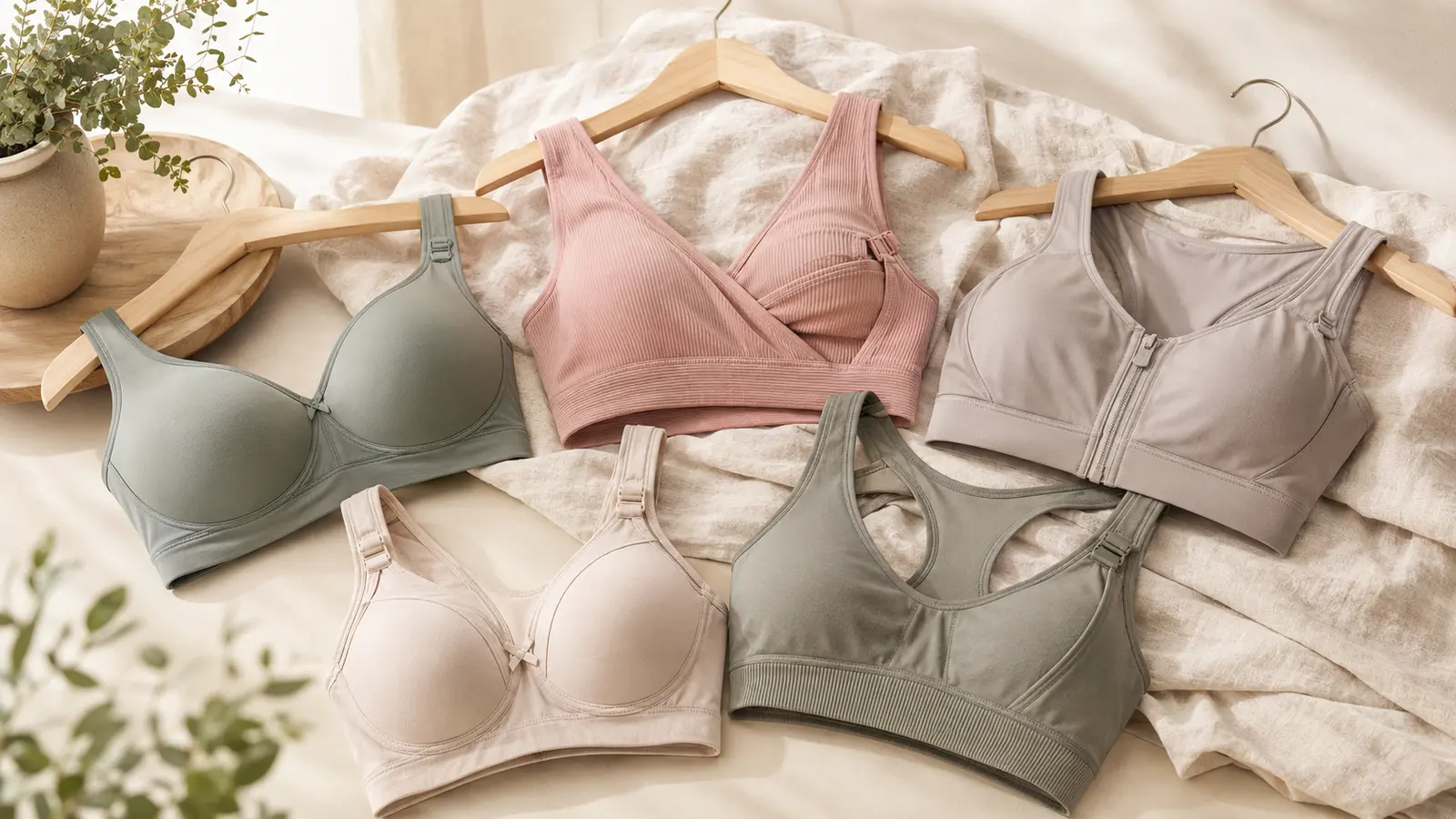
The best nursing bra is not one universal model. It is the one that fits your current body, supports without constricting, opens easily, and suits how you feed. Breast size can change through pregnancy, early milk production, and weaning, so flexibility matters.
This is a brand-neutral fit guide, not a claim that we personally tested every bra on the market. It helps you choose the right type before comparing models and prices.
Before buying: check the fit
- The band should stay level without digging or riding up.
- Cups should contain the breast without compression, gaps, or overflow.
- Straps should support without carrying all the weight.
- Clips or pull-aside panels should work with one hand.
- The bra should remain comfortable when breasts feel fuller.
1. Seamless everyday nursing bra
A stretchy, wire-free style is a useful first bra because it adapts to size fluctuations and sits smoothly under clothing. Look for removable pads only if you find them useful; they can fold during washing.
2. Crossover sleep bra
Soft pull-aside cups eliminate clips during night feeds. Choose breathable fabric and enough support for comfort, but avoid a band or neckline that presses into breast tissue.
3. Hands-free pumping and nursing bra
A combination style can hold pump flanges and open for direct feeding. Check compatibility with your pump setup and make sure the openings hold securely without compressing the breast.
4. Pumping-only bustier
This is worn just for pumping rather than all day. It can be a budget-conscious option if you already own comfortable nursing bras and only need hands-free support during sessions.
5. Fuller-bust wireless bra
Look for a deeper band, wider straps, multiple hook positions, side support, and cup sizing rather than only small-to-extra-large labels. Structure does not have to mean underwire.
6. Structured nursing bra
Some people prefer more lift and separation. A structured wire-free cup or a professionally fitted flexible-wire style may work, but no wire or seam should sit on breast tissue or cause pressure.
7. Nursing sports bra
For walking or clinician-approved exercise, choose support appropriate to the activity and easy feeding access. High compression can be uncomfortable when breasts are full, so test movement and breathing.
8. Cotton-rich nursing bra
Cotton-rich fabric may appeal to sensitive skin and warm sleepers. Check the stretch content: pure cotton can lose shape more quickly and may take longer to dry.
9. Leak-resistant nursing bra
Built-in absorbent layers can reduce the need for separate breast pads. Compare wash instructions, drying time, and whether the waterproof layer feels breathable enough for extended wear.
10. Nursing camisole with shelf support
A camisole combines light support and torso coverage, which can be convenient for layering or feeding outside the home. It may not provide enough lift for every cup size.
11. Front-fastening nursing bra
A front closure may be easier when shoulder movement is limited or after surgery unrelated to birth. Check that hardware does not press into the sternum or open unexpectedly.
12. Budget multipack
Multipacks make sense for sleep bras or simple everyday styles, but buy one set first. A low unit price is not useful if the band rolls, clips fail, or the fabric becomes uncomfortable.
How many nursing bras do you need?
Start with one or two flexible bras during late pregnancy or for the hospital, then reassess after birth. Many families find three in rotation practical—one worn, one washed, one available—but your laundry routine and leaking pattern matter more than a fixed number.
When the problem is not the bra
Persistent breast pain, a hot or red area, fever, significant nipple damage, or a hard area that does not improve deserves medical or lactation support. A better bra cannot correct an ineffective latch, infection, or milk-transfer problem.
Choose comfort first, buy slowly, and expect the “best” style to change as your body and feeding routine change.
Pain and milk-supply worries deserve help
Ongoing nipple pain, cracked or bleeding nipples, fever, breast redness, concerns about weight gain, or too few wet diapers are reasons to contact an IBCLC or your baby’s clinician. Online tips cannot assess milk transfer or your baby’s health.
Sources and further reading
Our editorial review used the following US health authorities: