Toddlers are very good at exposing a gift-buying truth adults would rather ignore: the biggest box, loudest toy, or longest feature list is not necessarily the thing they will play with next week.
The best Christmas gifts for toddlers are simple enough to understand, flexible enough to use in more than one way, and well matched to the child's actual interests and abilities. You do not need a mountain of toys. A few thoughtful choices can create far more play than a room full of novelty.
Start Here: What Makes a Toddler Gift Worth Buying?
Before choosing a specific toy, ask what job you want the gift to do. A useful toddler gift might support pretend play, big-body movement, building, drawing, practical independence, or quiet connection with a caregiver.
That is a better filter than asking which toy is trending. The American Academy of Pediatrics notes that traditional toys can support language, problem-solving, social interaction, and imaginative play, while no single toy is necessary for a child to reach a milestone.
Use these five filters
- Can the child understand the basic play idea? A toy that constantly needs adult setup often becomes an adult project.
- Can it be used more than one way? Blocks, figures, play food, art supplies, vehicles, and simple dress-up pieces tend to have more replay value than one-button toys.
- Does it fit the child's current interests? A toddler who watches every garbage truck does not need a fashionable toy category; they may need a sturdy truck.
- Can your home absorb it? Consider storage, noise, charging, batteries, and floor space before a giant gift enters the house.
- Is it safe for this specific child? Follow age labels and check for small parts, accessible button batteries, loose magnets, cords, sharp edges, and other hazards.
Best Christmas Gifts for Toddlers Who Love Pretend Play
Pretend play grows with the child. A two-year-old may simply feed a doll or push a toy car. Later, the same materials become restaurants, vet clinics, family stories, construction sites, and elaborate worlds.
1. A small pretend kitchen set
You do not need a full-size play kitchen. A basket with a few sturdy plates, cups, wooden or fabric food pieces, and a child-size pot can create the same kind of play with far less clutter.
Best for: toddlers who imitate cooking, feeding, shopping, or household routines.
2. Dolls or soft animals with simple accessories
A washable doll or stuffed animal plus a blanket, brush, cup, or small bed gives the child a clear starting point without dictating the story. Choose pieces large enough for the child's age and avoid loose accessories for children who still mouth objects.
3. Toy vehicles and a simple play mat
Cars, trucks, buses, tractors, and construction vehicles work especially well when they are sturdy and easy to push. A road mat is optional; painter's tape on the floor can become a road just as quickly.
4. Dress-up pieces that are easy to put on
Think hats, fabric capes, aprons, tote bags, or simple vests rather than complicated costumes. Avoid long cords, necklaces, or pieces that create entanglement risks.
Best Gifts for Toddlers Who Need to Move
Some toddlers seem physically incapable of walking past a sofa without climbing it. For them, a gift that channels movement may get far more use than another shelf toy.
5. A sturdy push or pull toy
This works best for children who already have the balance and coordination to use it safely. Look for a stable base, smooth edges, and age guidance that matches the child.
6. Soft indoor stepping stones or balance pieces
These can become an obstacle course, pretend river, color game, or path around the room. The useful feature is not complexity; it is that the child can rearrange the challenge.
7. A toddler ball set
Use balls specifically designed for young children and large enough not to present a choking hazard. A soft ball can support rolling, kicking, throwing, chasing, and simple turn-taking.
8. A ride-on toy for the right age and space
Ride-ons can be fantastic, but check the manufacturer's age range, stability, use environment, and protective-equipment guidance. The CPSC recommends appropriate safety gear for riding toys such as scooters.
Best Christmas Gifts for Toddlers Who Love Building and Figuring Things Out
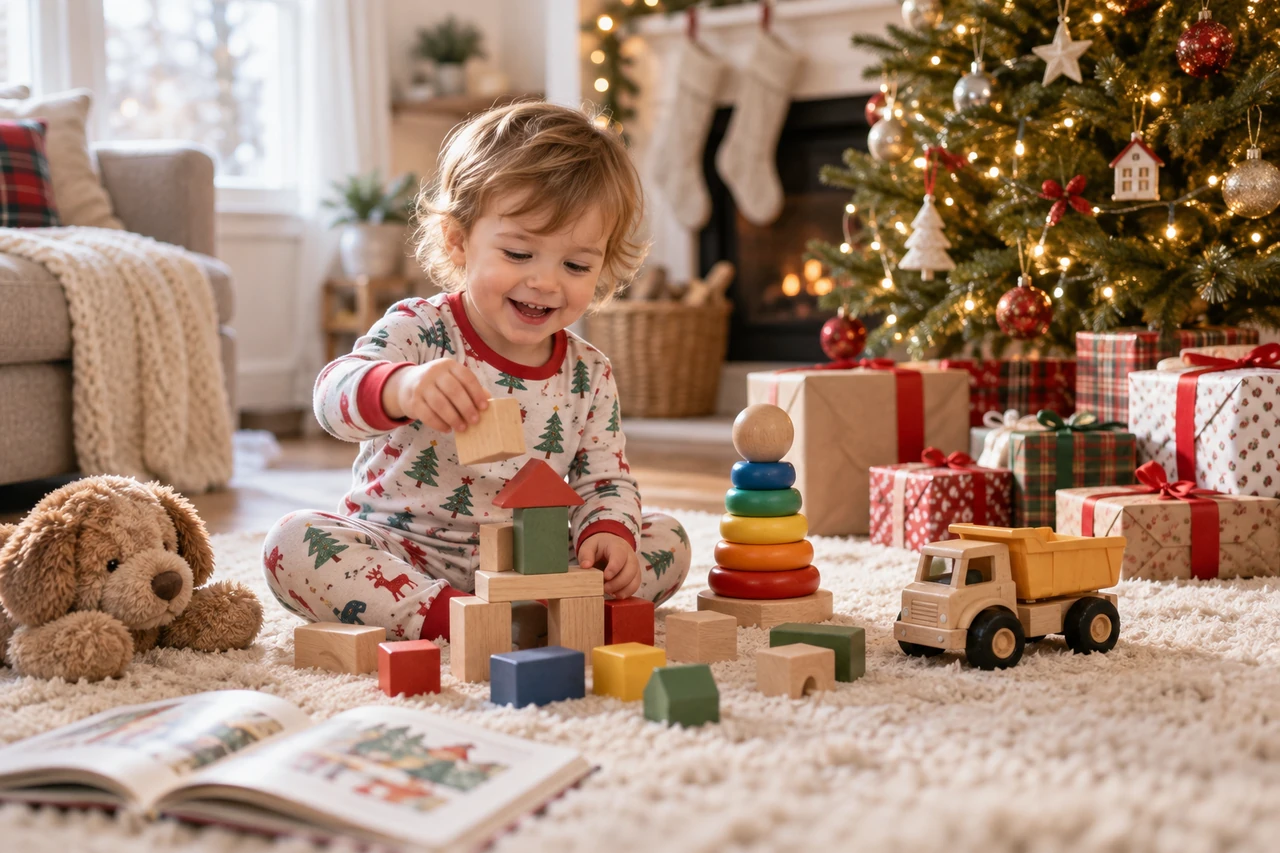
9. Large building blocks
Choose blocks made for the child's age, with pieces too large to choke on. Toddlers can stack, knock down, sort, transport, build enclosures, and eventually create recognizable structures.
10. Chunky inset puzzles
A good toddler puzzle has a manageable number of pieces and a clear match between piece and space. Animals, vehicles, familiar objects, and simple shapes are easier to talk about together while playing.
11. Nesting cups or stacking shapes
These are deceptively useful. They can become towers, containers, bath toys, pretend food bowls, hiding places, and sorting tools. Few gifts earn their storage space as efficiently.
12. Simple cause-and-effect toys
A ramp where a large car rolls down or a box where a ball disappears and reappears can hold attention without flashing lights. Look for a clear relationship between the child's action and what happens next.
Best Creative Gifts Without Creating a Craft-Supply Disaster
13. Washable chunky crayons and large paper
For young toddlers, easy-to-grip tools and plenty of paper are more useful than an elaborate art kit. Check the age label and supervise materials that could end up in the mouth.
14. Reusable sticker or cling scenes
Choose products made for the child's age with pieces large enough for safe handling. They are especially handy for travel, restaurants, or quiet play beside a caregiver.
15. A simple music basket
A few toddler-safe instruments—such as a sturdy drum, shaker, or bells enclosed in a child-safe design—can be more engaging than an electronic toy that performs for the child.
Gifts That Build Everyday Independence
16. A child-size cleaning set
Toddlers often want to participate in exactly what adults are doing. A small broom, dustpan, or cloth set can turn that urge into practical involvement rather than a separate "educational" activity.
17. A learning tower or sturdy kitchen helper
This is a bigger purchase and needs careful evaluation. Choose a stable product designed for children, follow age and weight limits, place it away from stove hazards, and supervise use closely.
18. A toddler backpack or small tote
For a child who loves carrying treasures, a simple bag can become a daily companion. Avoid long straps or closures that are not appropriate for the child's age.
Quiet Gifts Toddlers Can Grow Into
19. A small collection of excellent picture books
Choose books you can tolerate reading repeatedly, because repetition is part of toddlerhood. A mix of rhyming books, simple stories, search-and-find pages, and books about the child's current fascinations works well.
20. Family photo book
A sturdy board book or photo album filled with familiar faces can be especially engaging for young toddlers. It also gives you natural opportunities to name people, places, feelings, and memories together.
21. A cozy reading basket
Instead of another toy, pair two or three books with a washable floor cushion or child-size blanket for supervised reading time. Keep loose soft items out of infant sleep spaces; this is a play-and-reading setup, not crib bedding.
Experience Gifts Toddlers Can Actually Understand
"Experiences" can sound abstract when the recipient is two. The trick is to make the experience concrete and soon enough that the child can connect the gift to what happens next.
- A children's museum membership you will realistically use
- Zoo or aquarium passes
- A toddler music, movement, or swim class
- A special train ride or local attraction
- A recurring grandparent outing
- A simple "adventure box" with a small item connected to the outing
What to Skip for Most Toddlers
Not every popular gift is bad, but some categories deserve a harder look before buying.
- Toys with lots of tiny accessories if the child is under three or still mouths objects.
- Anything with easily accessible button batteries or high-powered magnets. Both can cause severe injury if swallowed.
- Huge toys with one narrow function. They can dominate the room while losing novelty quickly.
- Very loud electronic toys. More noise does not automatically mean more play.
- Gifts that require constant adult troubleshooting. If setup is complicated every time, spontaneous play becomes less likely.
- Too many gifts at once. Rotating a few toys later can make Christmas feel calmer and extend interest.
A Quick Safety Check Before You Wrap It
For children under three, the CPSC advises keeping toys with small parts away because of choking risk. Age labels matter, and HealthyChildren.org also recommends watching for button or lithium coin batteries, high-powered magnets, loose strings, weak seams, and breakable materials.
Also think about siblings. A toy that is appropriate for a four-year-old can still become a hazard if a younger toddler has access to its small pieces.
How to Choose When You Still Have Too Many Options
Pick one category the child already loves and one that gently expands their play. For example, a vehicle-obsessed toddler might receive one sturdy truck plus large blocks that can become garages, roads, bridges, and loading stations.
The goal is not to create the most impressive Christmas morning. It is to give the child a few things that continue to invite play after the wrapping paper is gone. If a gift fits the child, fits your home, and can be used again and again, it has already beaten most of the toy aisle.
Check small parts before a young child plays
For children under 3, keep toys, decorations, and gifts with small parts out of reach and follow the age labeling on anything you buy. Button and lithium coin batteries and high-powered magnets can cause severe internal injury if swallowed, so seek emergency care immediately if a child may have swallowed one. Keep loose strings, cords, and ribbons away from babies and young children.
Sources and further reading
Our editorial review used the following US health authorities: