
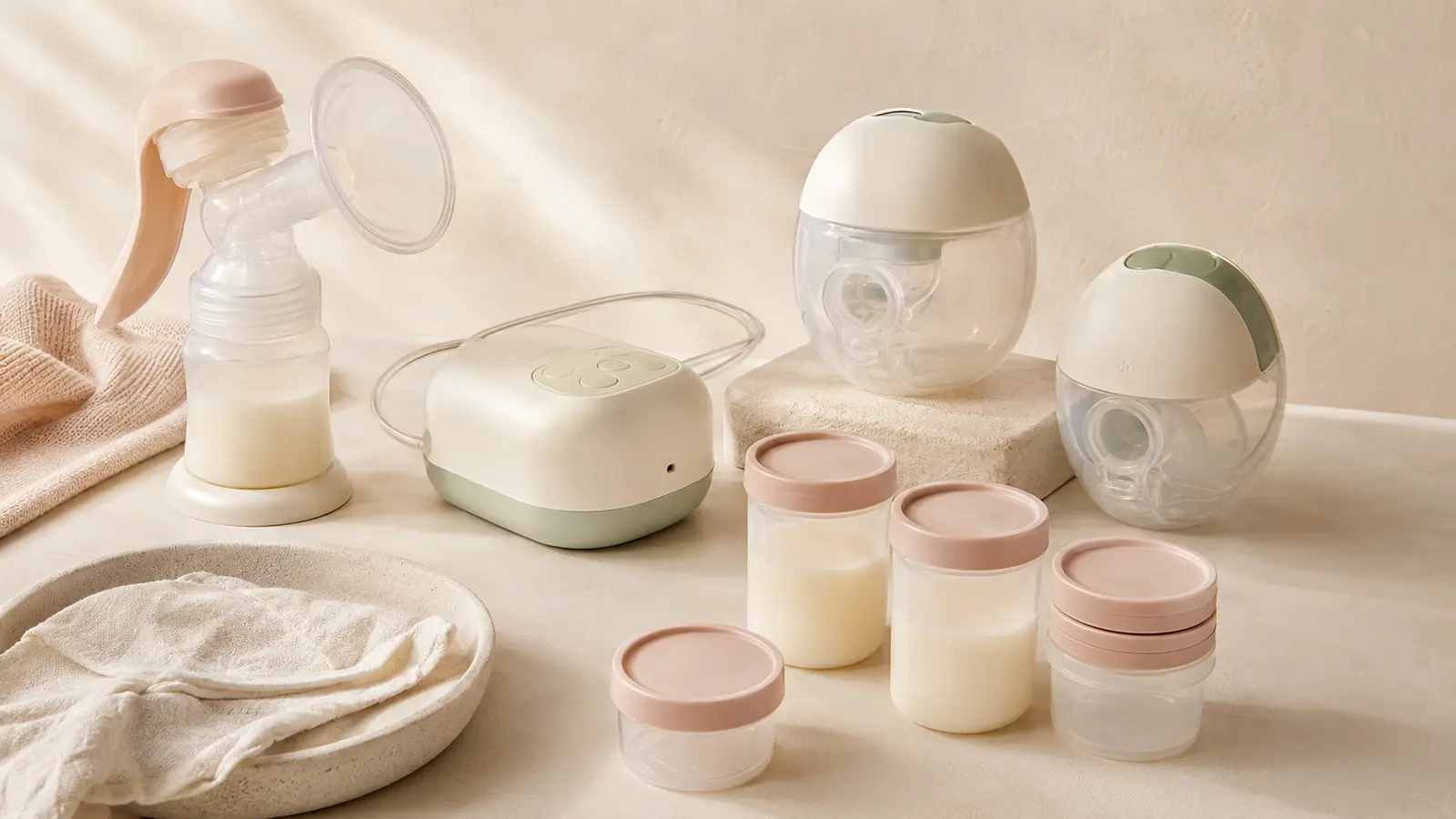
The best breast pump is not the one with the longest feature list. It is the one that fits your body, your pumping frequency, your access to power, and the places where you will actually use it.
This is a buying framework, not a hands-on ranking. Models and insurance coverage change, and no pump can guarantee milk output. If pumping is painful or milk transfer or weight gain is a concern, an IBCLC or your baby’s clinician can help assess the full picture.
1. A manual pump for occasional use
A hand-operated pump is quiet, light, and does not need charging. It can work well for occasional expression or as a backup. It does require repeated hand movement and pumps one side at a time.
2. A single electric pump
A single electric model may suit short, occasional sessions while reducing manual effort. Compare its weight, controls, power options, and whether converting sides is simple.
3. A double electric pump
Pumping both breasts at once can save time for people who express regularly. Look beyond peak suction: comfortable, adjustable settings and a reliable motor matter more than choosing the strongest level.
4. A wearable or in-bra pump
Wearables can offer mobility and discretion, but they may be harder to position, monitor, pour, and clean. Capacity and battery life also vary. Some parents use one as a convenient secondary pump rather than their only option.
5. A multi-user rental pump
Some pumps are specifically designed for multiple users with a separate personal collection kit. Others are single-user devices and should never be shared or bought used. Confirm the exact model’s FDA labeling before renting or borrowing anything.
6. Flange sizes that actually fit
The flange is the funnel-shaped part that fits over the breast. Fit can affect comfort and milk removal, and the two breasts may need different sizes. Your nipple should move without painful rubbing, pinching, whitening, or excessive tissue being pulled into the tunnel.
7. Controls you can understand half-asleep
Compare how easily you can adjust suction and cycle settings, pause, and restart. More settings are not automatically better. Pumping should not be painful, and turning suction higher is not a reliable way to fix poor fit or low output.
8. Realistic portability
Consider the full kit: motor, collection containers, cooler, charging cable, clean parts, and used parts. If you pump at work, ask about a private space, break time, refrigeration, and electrical access before deciding how portable the system needs to be.
9. Affordable replacement parts
Valves, membranes, tubing, flanges, and containers wear or get lost. Check that genuine compatible parts are available and reasonably priced. Follow the maker’s replacement instructions rather than waiting for obvious damage.
10. Cleaning you can sustain
Count the pieces that touch milk and how they must be washed, sanitized, dried, and stored. Follow the manufacturer and current CDC hygiene guidance after every use. A dedicated clean drying area can make the routine easier.
Before you pay
- Check insurance or health-plan pump benefits and supplier rules.
- Confirm whether the device is single-user or designed for multiple users.
- Check included flange sizes, containers, power supply, and warranty.
- Price the replacement parts you are likely to need.
- Make sure milk-storage containers are compatible with your routine.
When a pump problem is really a support problem
Output varies with timing, milk removal, fit, stress, feeding patterns, and individual physiology. Ongoing pain, breast redness with fever, damaged nipples, a sudden unexplained drop, worries about wet diapers, or concerns about infant weight deserve qualified support—not simply a different gadget.
A simple pump with the right fit and a workable cleaning routine often beats a feature-heavy pump that you dread using. Choose for your real day, not an idealized one.
Pain and milk-supply worries deserve help
Ongoing nipple pain, cracked or bleeding nipples, fever, breast redness, concerns about weight gain, or too few wet diapers are reasons to contact an IBCLC or your baby’s clinician. Online tips cannot assess milk transfer or your baby’s health.
Sources and further reading
Our editorial review used the following US health authorities: